What Is the Australian Curriculum? A Guide for Expat Families
What is the Australian Curriculum? Learn how it works, what it covers, and why expat families choose it for online learning abroad.
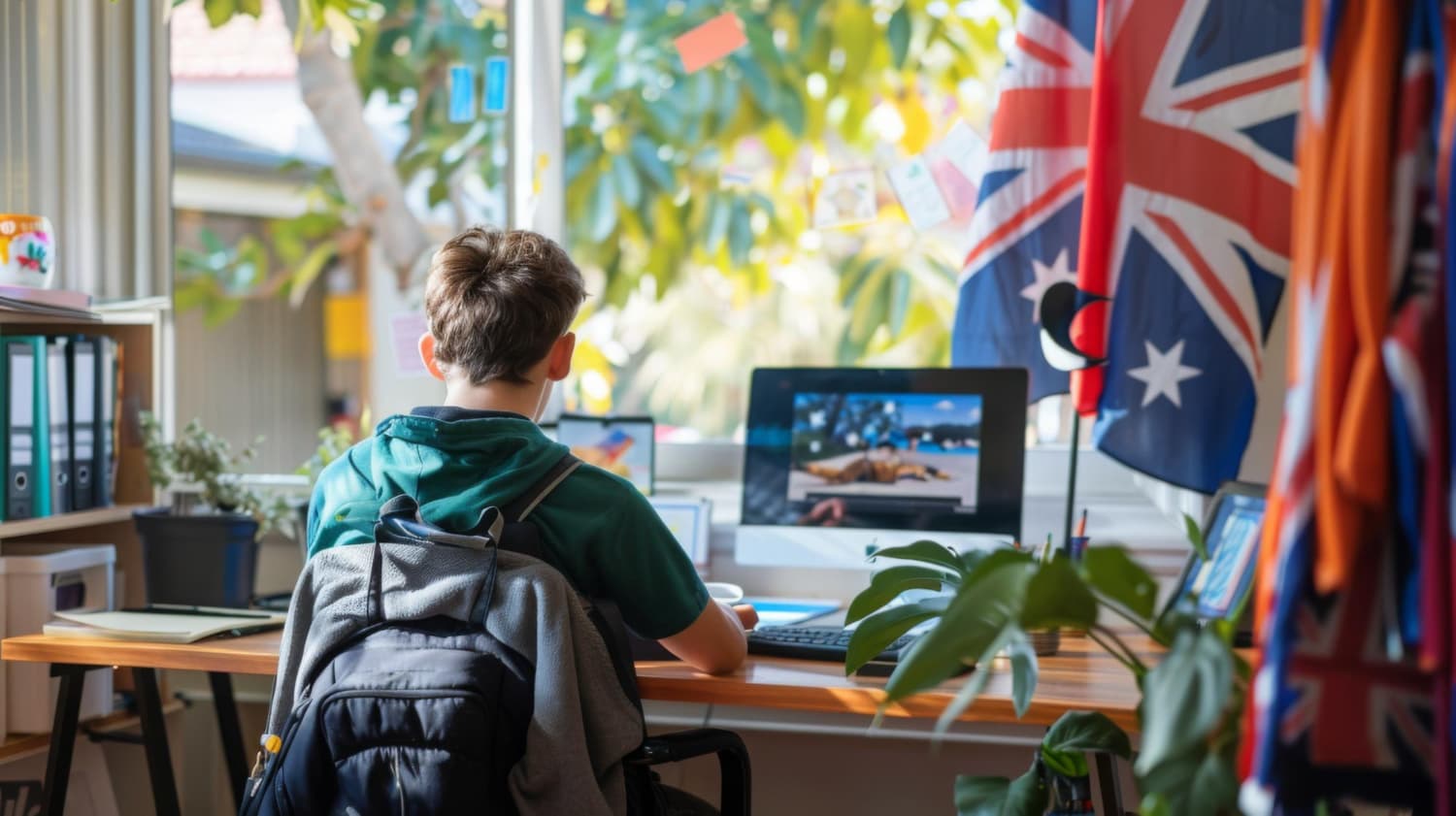
If you're an expat parent researching schooling options, you've probably asked yourself: what is the Australian curriculum, and is it the right fit for my child while living overseas? In simple terms, the Australian Curriculum is the national framework that sets out what students from Foundation (Kindergarten) through Year 10 should learn across Australia, regardless of which state or territory they live in. It was developed and is maintained by the Australian Curriculum, Assessment and Reporting Authority (ACARA), and it's built around consistent learning areas, achievement standards, and skills every student is expected to develop as they progress through school.
For expat families, understanding this framework matters because it determines whether your child can move between schools, countries, and education systems without losing academic ground — something many internationally mobile families care about deeply.
What Is the Australian Curriculum, Exactly?
At its core, the Australian Curriculum is a national blueprint, not a single textbook or exam. It describes:
What students should learn (the content)
How well they should be learning it at each stage (achievement standards)
Why it matters beyond exam results (general capabilities and cross-curriculum priorities)
Rather than being state-specific, it was designed so a child moving from Sydney to Perth — or from Dubai to Singapore, in an expat family's case — encounters the same core learning goals, just delivered through a school or provider's own teaching approach.
This consistency is one of the main reasons the ACARA curriculum is respected internationally: it gives families a predictable, transparent standard to measure progress against, no matter where in the world their child is studying.
Who Actually Uses the Australian Curriculum?
You don't need to live in Australia to study under this framework. It's used by:
Public and private schools across every Australian state and territory
International schools that offer an Australian-curriculum stream
Online and distance education providers serving expat and travelling families
Homeschooling families who want a structured, nationally recognised framework rather than building their own syllabus from scratch
This is exactly the audience Schola Global was built for. If you're weighing up your options, it's worth exploring Schola Global's Australian Curriculum programme, which delivers this exact framework online, with structured pacing and qualified teacher support, wherever your family happens to be based.
Key Learning Areas in the Australian Curriculum
The Australian national curriculum subjects are organised into eight core learning areas. Every student progresses through these, with depth and complexity increasing year by year.
Learning Area | What It Covers |
|---|---|
English | Reading, writing, speaking, listening, literacy |
Mathematics | Number, algebra, measurement, statistics, probability |
Science | Biological, chemical, physical and earth sciences |
Humanities and Social Sciences | History, geography, civics, economics |
The Arts | Visual arts, music, drama, dance, media arts |
Technologies | Digital technologies and design/technologies |
Health and Physical Education | Physical literacy, wellbeing, personal development |
Languages | A second language, where offered |
Each of these learning areas has its own achievement standards — clear descriptions of what a "typical" student should know and be able to do by the end of each year level. This is what makes it straightforward for a teacher (or a parent supporting online learning) to track whether a child is on pace.
General Capabilities: The Skills Behind the Subjects
Beyond subject content, the Australian Curriculum explicitly builds seven general capabilities into everyday learning:
Literacy
Numeracy
Digital literacy
Critical and creative thinking
Personal and social capability
Ethical understanding
Intercultural understanding
These aren't separate subjects — they're woven through every learning area. A geography unit, for instance, might simultaneously build literacy (through research and writing), digital literacy (through mapping tools), and intercultural understanding (through studying global communities). This is a big part of what people mean when they say the Australian curriculum is explained as "skills-based" rather than purely content-based — it's designed to produce well-rounded thinkers, not just students who can recall facts.
Cross-Curriculum Priorities
ACARA also embeds three priorities across all learning areas: Aboriginal and Torres Strait Islander histories and cultures, Asia and Australia's engagement with Asia, and sustainability. These give the curriculum a distinctly global, contemporary outlook — something many expat families find appealing, since it isn't narrowly nationalistic in focus.
Australian Curriculum vs Other International Curricula
Expat families often compare the Australian Curriculum against other well-known frameworks like Cambridge or the IB. Here's the short version:
Australian Curriculum — strong, skills-integrated framework for Foundation to Year 10, then typically transitions into senior secondary certificates
Cambridge IGCSE / A Level — internationally standardised, exam-heavy, widely recognised by universities worldwide
IB Diploma — holistic, inquiry-based, strong emphasis on independent research and global-mindedness
There's no single "best" answer — it depends on your child's age, your long-term destination plans, and your family's learning style preferences. If you want to weigh these options side by side in more depth, Schola Global's full breakdown of available curricula compares each framework's structure, pacing, and university pathways.
How the Australian Curriculum Works for Expat Families Studying Online
This is usually where the practical questions start. Here's what typically matters most:
Structured pacing — online providers map the ACARA curriculum into weekly or termly milestones so learning stays on track across time zones and travel.
Qualified teacher support — not just self-paced content, but real teachers reviewing progress against the official achievement standards.
Portability — because the curriculum is nationally consistent, a child can pause, relocate, or resume without re-learning content or falling behind a new syllabus.
Recognised progression — moving between the Australian Curriculum and other systems (like Cambridge or IB) later in secondary school is generally smoother than switching between two unrelated national systems.
This is precisely the gap Schola Global's approach to mastery-based learning was designed to close for online students — ensuring a child doesn't just move through content, but genuinely masters each stage before progressing, which matters even more when learning happens outside a traditional classroom.
Why the Right Online Provider Matters
Not every online school delivering the Australian Curriculum does it the same way. Some simply digitise textbooks; others build genuine, teacher-supported learning journeys around it. If you're comparing providers, it's worth reading through how to choose the best online school for your child before committing — the difference between providers can significantly affect how well your child adapts and progresses.
Schola Global was built specifically around this challenge: supporting internationally mobile families with a full range of accredited online learning programmes, including a dedicated Australian Curriculum pathway, delivered with real teacher oversight rather than unsupervised, self-paced modules.
Frequently Asked Questions
1. What is the Australian curriculum designed to achieve? It's designed to give every student, regardless of school or state, a consistent set of learning goals across core subjects, alongside broader life skills known as general capabilities — critical thinking, literacy, digital literacy, and more.
2. What year levels does the Australian Curriculum cover? It covers Foundation (Kindergarten) through Year 10. After Year 10, students typically move into state-based or internationally recognised senior secondary certificates.
3. Can expat families follow the Australian national curriculum subjects fully online? Yes. Structured online providers deliver the complete set of learning areas — English, Mathematics, Science, Humanities and Social Sciences, and more — with teacher support, progress tracking, and pacing aligned to the official achievement standards.
4. Is the ACARA curriculum recognised internationally? Yes. Because it's a nationally standardised, transparent framework with clearly published achievement standards, schools and universities internationally generally recognise progress made under the Australian Curriculum, making transitions between countries or curricula more straightforward.
5. How is the Australian curriculum explained differently from a typical school syllabus? Unlike a simple subject-by-subject syllabus, it integrates general capabilities (like critical thinking and intercultural understanding) and cross-curriculum priorities directly into everyday learning, rather than treating them as separate add-ons.
Conclusion
Understanding what the Australian Curriculum actually involves — its learning areas, general capabilities, and nationally consistent standards — makes it much easier to judge whether it's the right fit for your child's education while living abroad. For expat families specifically, its portability and transparency are often the deciding factors.
If you're ready to explore whether this framework suits your family, book a free consultation with Schola Global to talk through your child's current stage, your destination plans, and which pathway fits best — or go ahead and enrol your child directly to get started on a structured, teacher-supported Australian Curriculum journey, wherever in the world you're based.